
What everyone was talking about at UKREiiF 2026
That’s another UKREiiF done and dusted and while the industry is in choppy waters at the moment, the talk in Leeds has been reassuring and a cause for optimism.
The conference gets bigger every year with more stages, fringe events, networking opportunities and coffees than it’s physically possible to attend. In fact, one of the recurring conversations this year was whether UKREiiF is almost becoming too big.
Lots of people we spoke to admitted they’d gone without a full pass for the first time, choosing instead to focus on meetings, side events and targeted conversations rather than trying to sprint between pavilions all day. There’s so much happening now that it’s impossible to consume everything. In some ways, that’s a sign of how important the conference has become to the industry.
But underneath the packed schedules and crowded terraces, there were some very clear themes emerging across the week.
Let’s explore.
Collaboration is a must-have
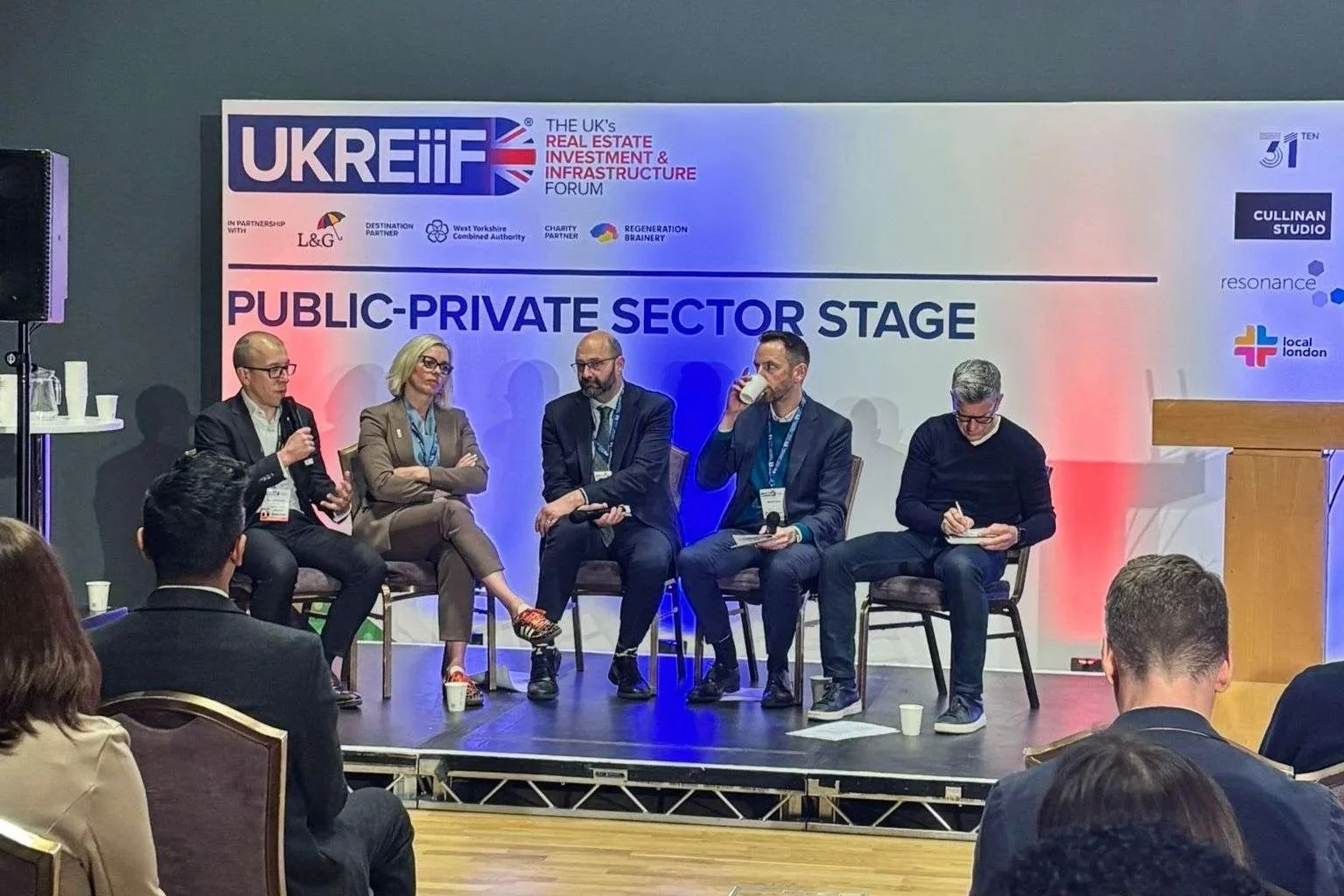
If there was one dominant thread running through UKREiiF this year, it was the growing recognition that very little gets delivered without meaningful collaboration between the public and private sectors.
It was a topic that snaked its fingers into virtually every conversation, whether that was housing delivery, regeneration, transport, infrastructure or investment.
Can major schemes realistically happen without public-private partnerships?
“Probably not”, was the predominant answer.
We all know how difficult it is out there at the moment. Viability pressures, planning complexity, infrastructure requirements and funding gaps are making delivery incredibly difficult in isolation. The scale of challenge means that pooled expertise, shared risk and long-term partnerships are becoming essential rather than desirable.
This isn’t a new conversation, but the tone of this conversation felt more mature than previous years. Less adversarial. Less about sectors pulling in different directions and more about how different organisations can align around shared objectives.
The point was made repeatedly that regeneration has to be viewed in terms of long-term stewardship over short-term transactions. This came up repeatedly across discussions around housing partnerships, town centre regeneration and mayoral investment models. The places making progress are often the ones with consistency of leadership, long-term thinking and the confidence to build relationships that last beyond political cycles.
Devolution is growing up
Devolution is a hot topic and has been for years across industry conferences and it’s only picked up momentum since the success stories of several devolved systems across the country, not least Manchester. In fact, Manchester frequently entered the conversation, often from people from different UK regions than the North West. We’ve become somewhat of an exemplar.
Whether it’s transport integration, housing delivery, investment pipelines or strategic planning, Greater Manchester has a lot to shout about and can demonstrate what’s possible in these areas. Devolution works and can be put into practice at scale.
All that success is not a reason to stop and admire the good work, however. There’s still room for those devolution mechanisms to evolve. For example, there were some mutterings that funding structures still don’t always align with how places actually grow or deliver projects over the long term.
One phrase that came up repeatedly was “doubling down”. More specifically, doubling down on delivery capability, regeneration and investment in places.
The industry is still wrestling with viability
Of course, viability continues to be a huge issue for the industry, and it sat underneath almost every conversation. You can’t get into the broader discussions around delivery challenges, funding structures, planning delays, labour shortages, inflation and political uncertainty without the viability issue.
No one was burying their head in the sand and everyone understood how difficult the market currently is. I think there was even a joke from a speaker on a panel event to the effect of, “anyone that puts a brick on top of a brick at the moment deserves a medal”. But this was also tempered by the problem-solving attitude the built environment is known for.
Much like the prevalence of the “doubling down” discussion, there were repeated mentions of this idea of “patient equity”. In simple terms, it’s long-term investment capital that’s prepared to take a slower, more strategic view of returns in order to unlock regeneration, infrastructure and housing projects that might otherwise struggle to get off the ground in the current climate. Rather than chasing quick wins, the focus is on sustained growth, long-term stewardship and creating places that deliver value over decades rather than years.
That’s particularly relevant when it comes to regeneration, where success often relies on confidence, consistency and the ability to take a genuinely long-term view.
Place still matters
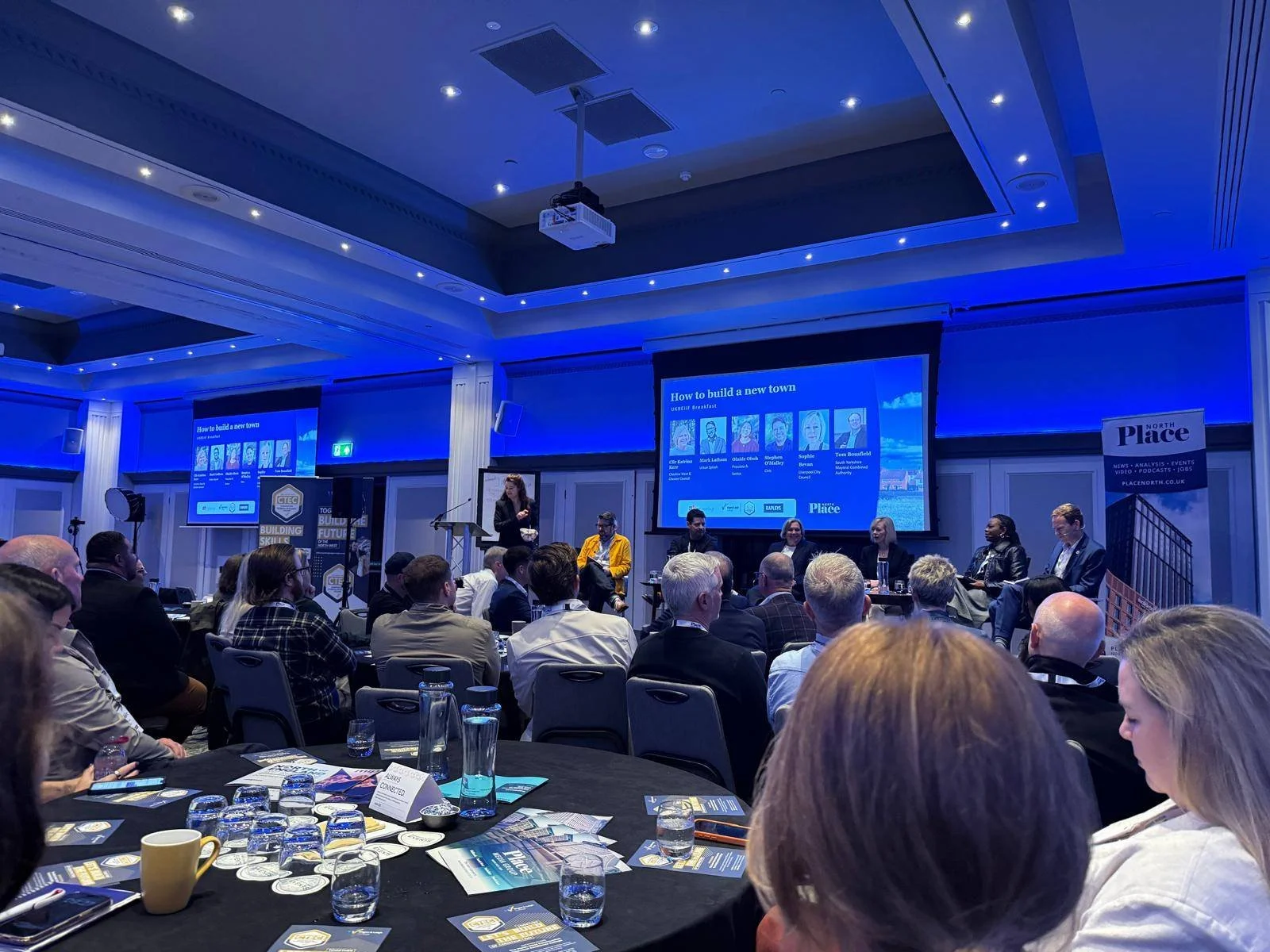
One of the more encouraging aspects of the week was the continued focus on place quality and long-term thinking.
There were some really interesting discussions around density, landscape, social cohesion and the importance of creating places that work for existing communities as well as incoming residents and investment.
A lot of speakers challenged the idea that growth and good placemaking are somehow competing priorities.
The best conversations recognised that successful regeneration is about creating places people genuinely want to spend time in, feel connected to and benefit from over the long term.
To achieve that, we have to switch gears and think more holistically about transport, public realm, culture, landscape and social infrastructure rather than treating them as secondary considerations.
The value of getting people in a room together
For all the conversations about delivery pressures, politics and economic uncertainty, the overriding feeling from the week was still positive. That’s the real value of conferences like UKREiiF.
They create space for honest conversations between people who are all trying to solve broadly similar problems from different angles. Sometimes that leads directly to work. Sometimes it leads to partnerships. Sometimes it’s simply useful to compare notes and realise other people are wrestling with the same challenges.
The built environment remains an industry full of pragmatic people who are generally willing to share ideas, challenge assumptions and help move conversations forward.
And a good job too. It’s the only way we can find the right route forward in challenging times.