
Beware, the AI bear
Handle with caution
Strap yourself in, we’re about to get a bit shouty.
When it comes to AI, we often find ourselves running our hands through our hair in exasperation.
Don’t worry, you’re not being told off. It’s more like this. Friends tell friends difficult truths sometimes. You’re hitting the sauce too much, you should really shower more than once a month, maybe dreadlocks aren’t the best look for a white man in his late forties…
You get the picture. An honest word from someone with your best interests at heart can stop you looking foolish, even if the news is difficult to hear sometimes.
So let us lay it on the line for you.
Your relationship with AI could well be problematic.
We write a lot of content. For clients’ websites, social media, press, publications and more. And, don’t get us wrong; we’re not afraid to use AI as part of our working process. Now is not the time to become a Luddite; it’s a brilliant tool, transforming work just like the trusty calculator did back in the 1970s.
We’re getting really good at sniffing it out, and there’s a distinctly familiar whiff about it.
Take, for example, this LinkedIn post from Chris, who helps smart, capable people become heard.
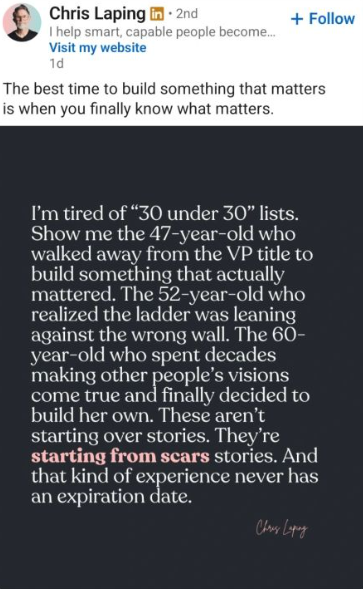
Sounds great, right?
Until you see it again. And again. And again.
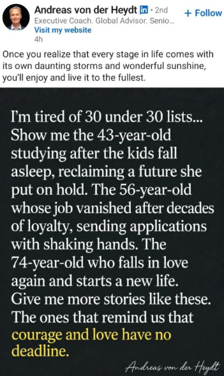
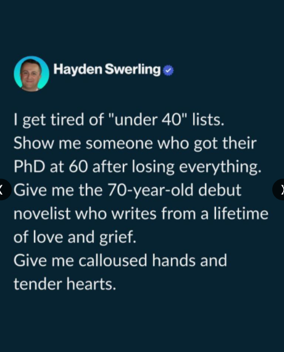
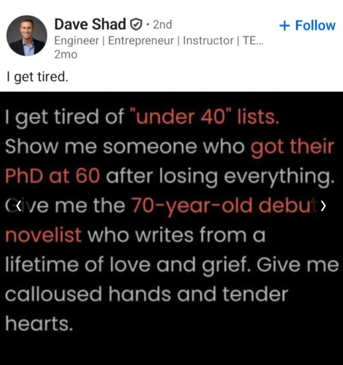
(Thank you to Julia Vol for bringing this to our attention on LinkedIn recently)
What has happened? Are folks losing confidence in their own opinions? Or are people just too busy to stop and think?
So consider this our public service announcement to stop you falling into the same hole as these well-meaning chaps have.
Do not
…use AI to write your social posts
Those contrasting ‘it’s not this, it’s that’ phrases, the punchy two-word paragraphs, the phrasing within em dashes, and even the cute little icons are a key giveaway.
There’s a reason those literary devices have been picked up by AI. The LLMs have hoovered up trillions of pieces of content, rounded off the edges, stripped away the individuality and delivered a perfectly palatable, milquetoast paradigm that the robot overlords never stray away from. It’s unsalted, unsweetened gruel. It offers you some basic nutrition but you’ll never remember it or value it in the same way you would a meal crafted by a master of haute cuisine or even a rustic home chef.
When a post is littered with these terms of art and grammatical calling cards, it’s painfully obvious what the author has done and how little effort they’ve put into it. People can spot it a mile off and it makes you look lazy, careless and unserious.
Remember that ‘uncanny valley’ feeling from the noughties when digital imagery started to get clever? That’s what is happening now to written content.
Importantly, you’ll pay for it with your audience. Why should people spend longer reading your content than you spent creating it? You might still get a few likes and reactions from people who know and like you already, but do you really think you’re going to be convincing a cold audience that you’re worth listening to?
…turn to Claude to figure out what your opinion is
When you’re asked to provide a press quote or editorial comment, you’re being asked because you’re an authority on the subject matter. You’re the clever one, the human with thoughts and feelings.
Claude will only tell you what everyone else thinks. It can help you research the topic but it can’t tell you your opinion. By all means, ask the robots what the Employment Rights Act 2025 is, but don’t ask it what you should say about it.
The same applies when you’re reviewing another person’s written work. Resist the urge to feed it through a large language model (LLM) and send back verbatim copy edits. If we’ve gone to the trouble of crafting something unique, reflecting your opinions, unfettered AI edits are only going to make it sound like something anyone could say.
You’re the one living in the here and now. You’ve worked hard to get to your position, and it’s your lived experience that means you’re able to predict what might happen next.
Editors are rejecting outright anything obviously written by AI. And they probably won’t accept your comment next time.
…rely on Copilot for your thought leadership
Copilot and other tools are great when you’re putting together thought leadership articles. They can help you structure your thoughts (the emphasis on “your”), interrogate transcripts and provide the structural building blocks for you to slot in your voice and unique expertise.
No matter what you’ve been told about the latest prompts, the ability to train the LLM to talk like you, or how it can provide genuine insight that’s not just banal regurgitation, it’s all a load of nonsense. AI simply cannot be a thought leader in the way that you can. It just can’t generate the independent thought and it certainly can’t speak with a unique voice.
A true thought piece offers a new idea or perspective on a topic, but AI can only ever offer you something that’s a clone of everyone else’s thoughts.
It’ll always offer you an ‘improvement’ if you ask it, even on work it has suggested to you mere moments before. LLMs have got us doubting ourselves, but our advice is this: always listen to your gut over a suggestion that an LLM gives you.
AI is capable only of giving back what you’ve already given it. It won’t challenge your thinking or bring in considerations from other places.
…use Canva to build your visual identity
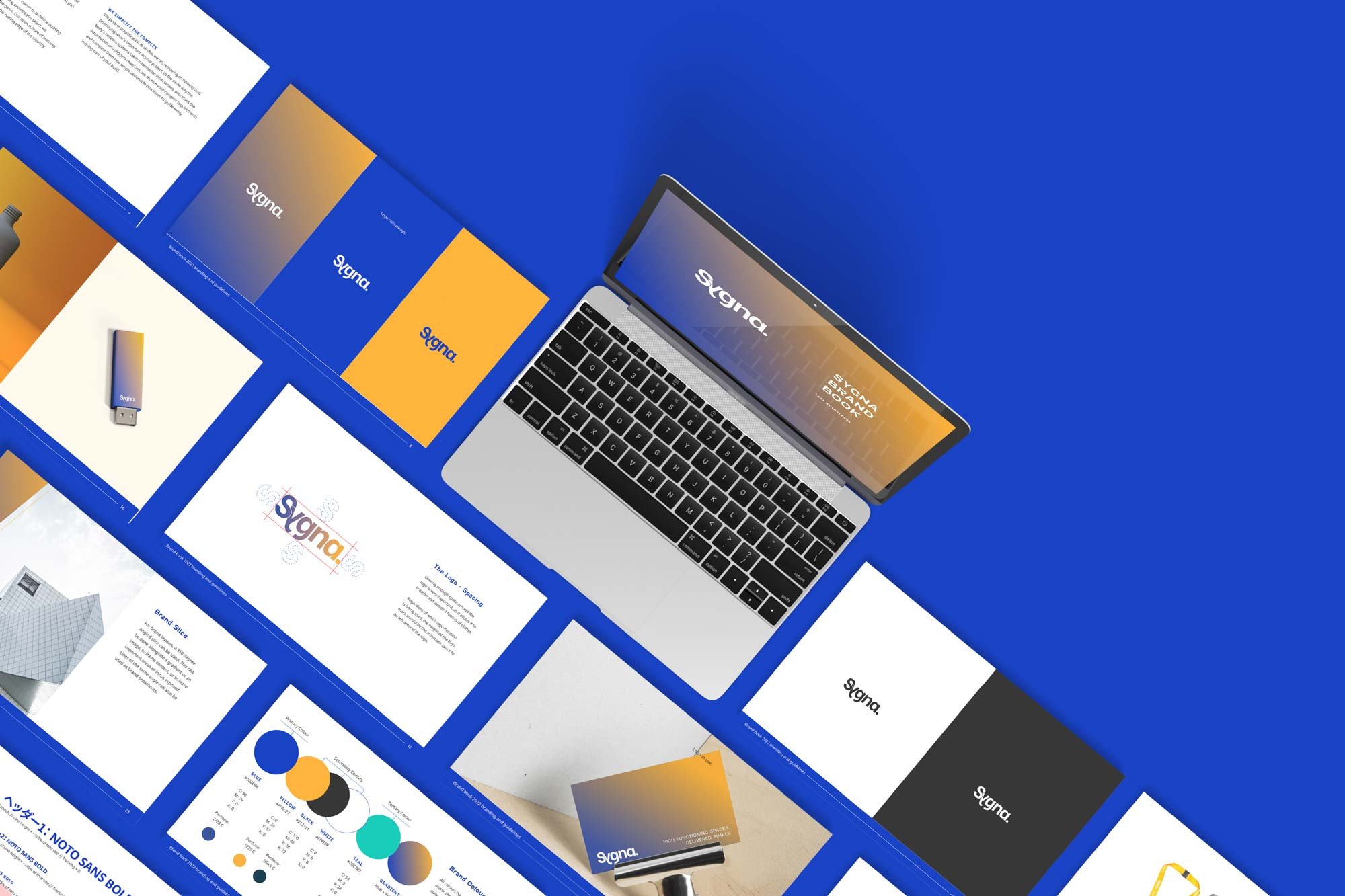
Your visual brand (logo, colours, graphic assets and all the templates that carry them) is built on who you are. It represents the heart and soul of your business. There’s a lot of thinking that goes on behind the scenes to connect your visuals with the values and personality of your brand.
And a skilled professional is the only person you should allow to create them.
This is an age-old problem. People used to turn to their nephew’s best mate. Or a stranger on Fiverr. Or, embarrassingly, Microsoft Paint. AI tools are just the next iteration of this.
But a visual brand development is seriously skilled work resulting in something that represents everything about your company in a two-second blink of an eye.
It’s design, not guess work. Don’t put it in the hands of an amateur (whether human or bot).
You’re the human
Don’t mistake us, we love AI and use lots of AI tools for planning, scheduling, automating repetitive admin tasks, capturing conversations and gathering information. And yes, we also use it in our writing, to interrogate transcripts after we’ve taken a brief, for research on unfamiliar topics and for all manner of small, non-creative jobs.
But it isn’t a creative and it can never be authentic.
The deluge of ‘thought leadership’ content we’re all seeing on social media often says very little and it always sounds the same.
Mimicry itself isn’t the sole issue. Some great work has been created over the years through mimicking other greats. Where would Oasis be without the Beatles? Tribute acts can be a great night out (I’m looking at you, Blobbie Williams). But AI copy is a bit different. The content it mechanically churns out is akin to a grey, featureless concrete block. This block is self-replicating, each iteration informing the next so everywhere you turn you see them, one after another in an endless sea of featureless concrete blocks. When you’ve seen a million, you cease to see them in their own right. They’re a grain of sand, amongst a legion of others, gestalt and irrelevant in isolation.
Now imagine an interruption in that pattern. A structure that isn’t a concrete block. Something with curved edges, windows, colour, and decoration. Maybe there’s even a few mistakes. To err is to be human, after all. This wonderful anomaly stands apart, and eyes are drawn to it. It’s unique, characterful and the perfect vehicle for carrying a message.
A message that’s yours to craft.
Not AI’s.